

Sustainability is a word that appears everywhere in travel today.
Electric vehicles. Carbon-neutral claims. Eco-labels. Offsets.
But on a small island like Madeira, sustainability is more complex than a badge or a battery.
It requires looking at the whole system.
Energy on an island: the bigger picture
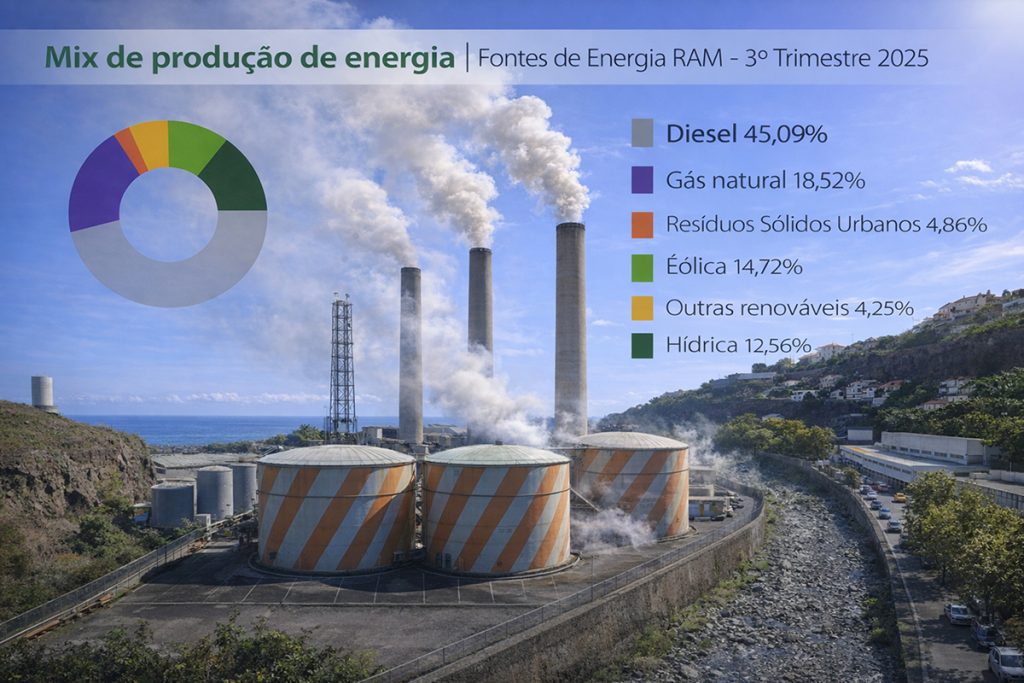
Madeira is an isolated island in the Atlantic. Unlike mainland countries connected to large energy grids, the island produces its own electricity.
According to the regional energy mix (3rd trimester 2025), electricity production currently includes:
- Diesel – 45.09%
- Natural gas – 18.52%
- Wind – 14.72%
- Hydroelectric – 12.56%
- Urban waste – 4.86%
- Other renewables – 4.25%
A significant portion of electricity still comes from diesel generation, including facilities near Câmara de Lobos.
This isn’t a criticism — it’s a reality of island energy systems.
Electric mobility is often presented as zero-emission. But on islands where electricity production relies partly on fossil fuels, the picture is more nuanced.
Sustainability depends not only on what we drive — but also on how energy is produced.
Longevity vs constant replacement
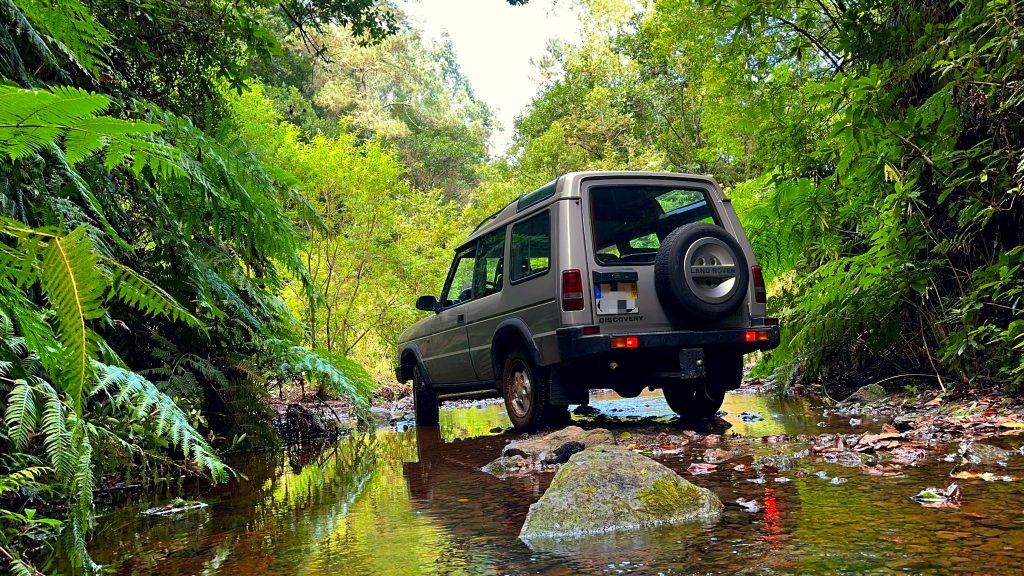
Another aspect rarely discussed in tourism is lifecycle impact.
Manufacturing a new vehicle — electric or combustion — requires raw materials, energy, global transport and industrial production.
Extending the life of an existing vehicle reduces the demand for new manufacturing.
My Land Rover is over 30 years old. It is maintained carefully, restored where necessary, and continues to operate reliably.
Keeping a vehicle in service for decades is, in its own way, a form of resource efficiency.
Sustainability is not only about new technology.
It is also about durability and long-term care.
Scale matters more than labels
Sustainability in tourism is also about scale.
One privately operated vehicle serving one small group per day has a very different impact profile than multi-vehicle operations running high-volume, fixed routes.
Lower volume means:
- Fewer vehicles on the road
- Less congestion in sensitive areas
- Greater flexibility around weather conditions
- The ability to avoid crowded hotspots
Small-scale tourism allows places like Fanal Forest or the north coast villages to breathe.
The difference is not just environmental — it’s experiential.
Ownership changes incentives
There is another dimension to sustainability: responsibility.
When the guide is also the owner, reputation is personal.
Independent operators depend on long-term trust, not volume.
That changes behaviour.
Routes are adapted. Conditions are respected. Sensitive areas are approached carefully. Guests are not rushed through fixed itineraries to meet schedules.
Sustainability is not only environmental.
It is also behavioural.
Supporting local resilience
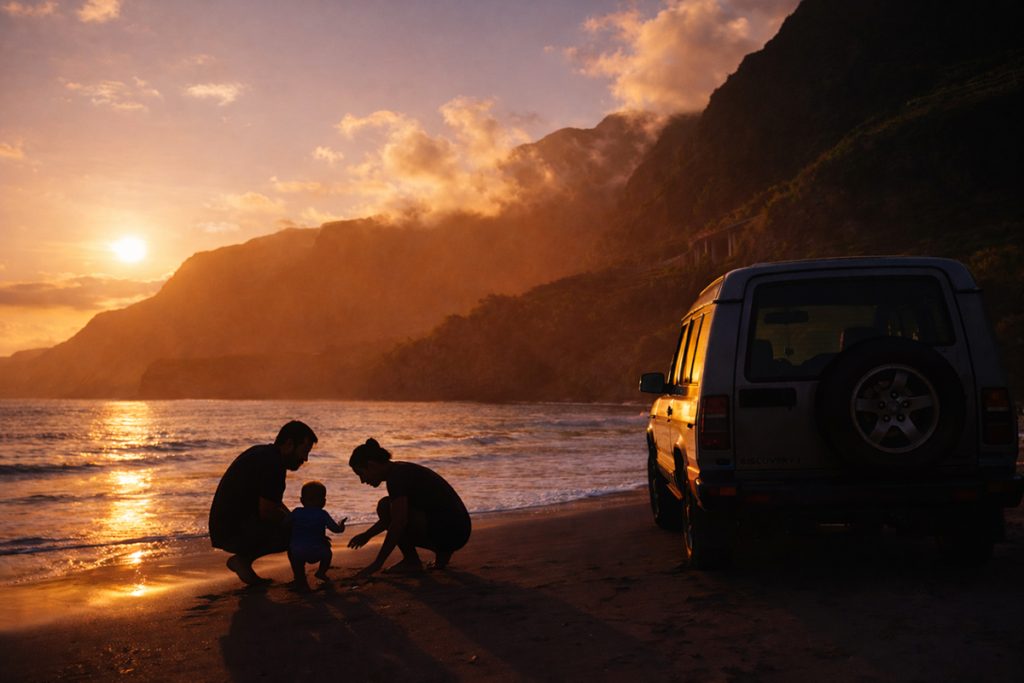
Economic sustainability is often overlooked.
Choosing independent, locally based businesses keeps more value within the island’s economy. It strengthens small communities and supports long-term resilience.
Mass tourism tends to centralise profit and scale quickly.
Small-scale tourism grows slowly — and intentionally.
A quieter form of sustainability
This is not an argument against electric vehicles. Madeira’s renewable share is growing, and technological progress is important.
But sustainability is not a simple equation.
On an island like Madeira, it includes:
- Energy production realities
- Vehicle lifecycle impact
- Scale of operation
- Economic structure
- Behaviour in sensitive landscapes
Sometimes the most sustainable option is not the newest one.
Sometimes it is the one that lasts, adapts, and remains small.
Final thoughts
Sustainable tourism in Madeira is not about marketing claims.
It is about:
- Respecting terrain
- Operating at a human scale
- Maintaining what already exists
- Avoiding unnecessary consumption
- Choosing quality over quantity
On a mountainous Atlantic island, sustainability is less about appearing modern — and more about being mindful.
And often, mindfulness begins with staying small.